
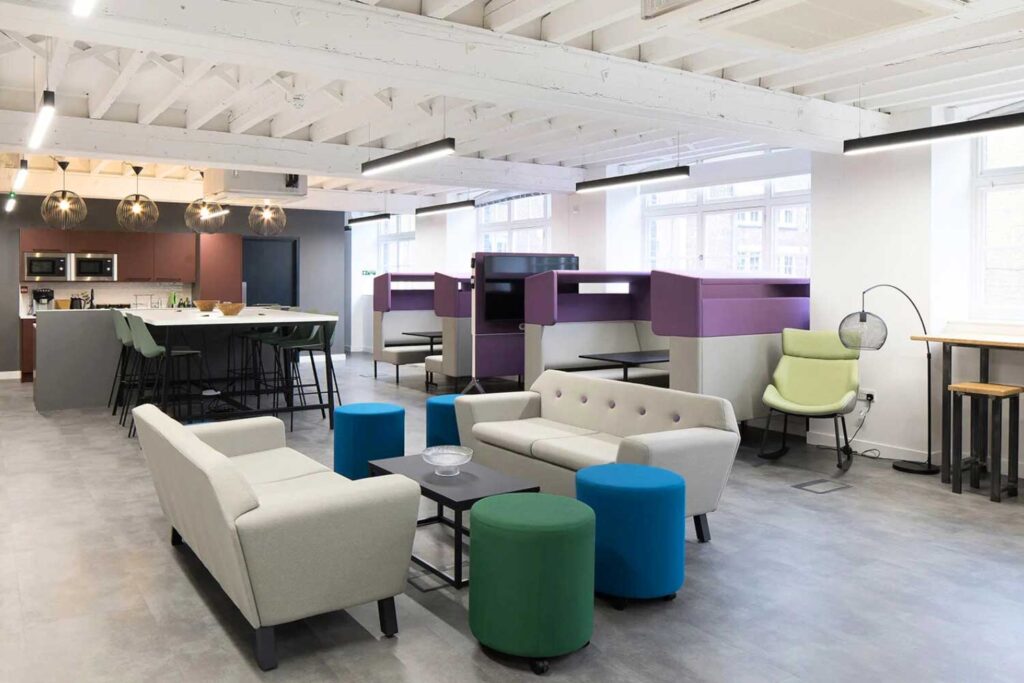
As businesses continue to adapt to hybrid work models and evolving employee expectations, optimising office space has become more critical than ever. In 2025 and 2026, the focus is on creating environments that foster collaboration, well-being, and productivity. Here’s how to make the most of your office space:
1. Embrace Flexible and Modular Layouts
The traditional fixed-office layout is giving way to adaptable, modular designs. By incorporating movable walls, modular furniture, and multi-functional zones, businesses can create spaces that easily transition between individual work, team collaboration, and social interactions. This flexibility supports hybrid work models and accommodates varying team sizes and functions.
2. Prioritise Employee Wellbeing
Spaces that promote health and comfort are essential. Integrating biophilic design elements, ergonomic furniture, and access to natural light can significantly enhance employee satisfaction and productivity. Additionally, incorporating wellness rooms, quiet zones, and outdoor spaces can provide employees with areas to recharge and focus.
3. Utilise Smart Technology for Space Management
Leveraging smart technology can provide valuable insights into how office spaces are used. Tools that track occupancy, monitor environmental conditions, and manage resources can help businesses optimise space usage, reduce energy consumption, and improve overall efficiency. These technologies enable data-driven decisions that align with sustainability goals.
4. Design for Collaboration and Community
Modern offices should facilitate interaction and community building. Creating open spaces, communal areas, and informal meeting zones encourages spontaneous collaboration and strengthens team dynamics. Designing spaces that reflect company culture and values can also enhance employee engagement and retention.
5. Implement Sustainable Practices
Sustainability remains a top priority. Opting for energy-efficient lighting, sustainable materials, and waste-reduction strategies can minimise environmental impact and reduce operational costs. Additionally, designing spaces that support remote work and reduce the need for commuting can contribute to a company’s overall sustainability efforts.
Optimising office space requires a holistic approach that balances functionality, flexibility, and sustainability. By embracing adaptable layouts, prioritising employee well-being, leveraging smart technology, fostering collaboration, and implementing sustainable practices, businesses can create work environments that support their evolving needs and goals.