
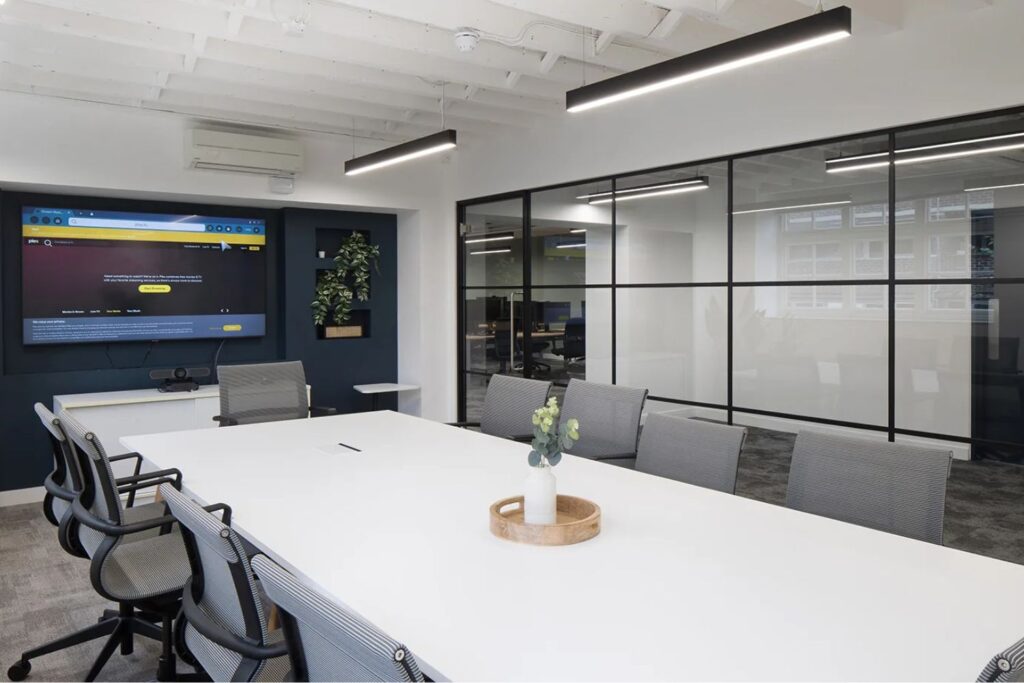
The boardroom of 2026 has come a long way from the isolated, intimidating spaces of the past. It’s now a multifunctional space designed for collaboration, connection and clarity. What are the main considerations when designing a boardroom?
Built for hybrid working
Hybrid working is now the norm, and the boardroom must support it seamlessly. That means layouts designed for equality between in-room and remote attendees, with clear sightlines, integrated screens, high-quality cameras and microphones that ensure everyone feels present and heard wherever they’re joining from.
Considered acoustics
Poor sound quality can derail productivity and engagement, especially during hybrid meetings. The boardroom of 2026 considers sound from the start, using acoustic panelling, soft finishes and smart layouts to reduce echo, absorb noise and create a calm, focused environment.
Collaboration-first design
Today’s boardrooms need to be flexible, welcoming spaces that encourage discussion, creativity and problem-solving. Modular furniture, adaptable layouts and writable surfaces allow the room to shift from formal presentations to collaborative workshops with ease.
Fully integrated technology
The modern boardroom is fully kitted out with intuitive and reliable systems that are easy to use. Wireless connectivity, integrated booking systems and smart controls remove friction and keep meetings flowing smoothly.
Inviting
Perhaps most importantly, the boardroom of 2026 is a place people want to spend time. Comfortable furniture, thoughtful lighting and considered materials help create an environment that feels inviting rather than intimidating.
Human-centred, technically smart and built for how we work today. The boardroom of 2026 is a space that supports better thinking, better collaboration and better decisions.