
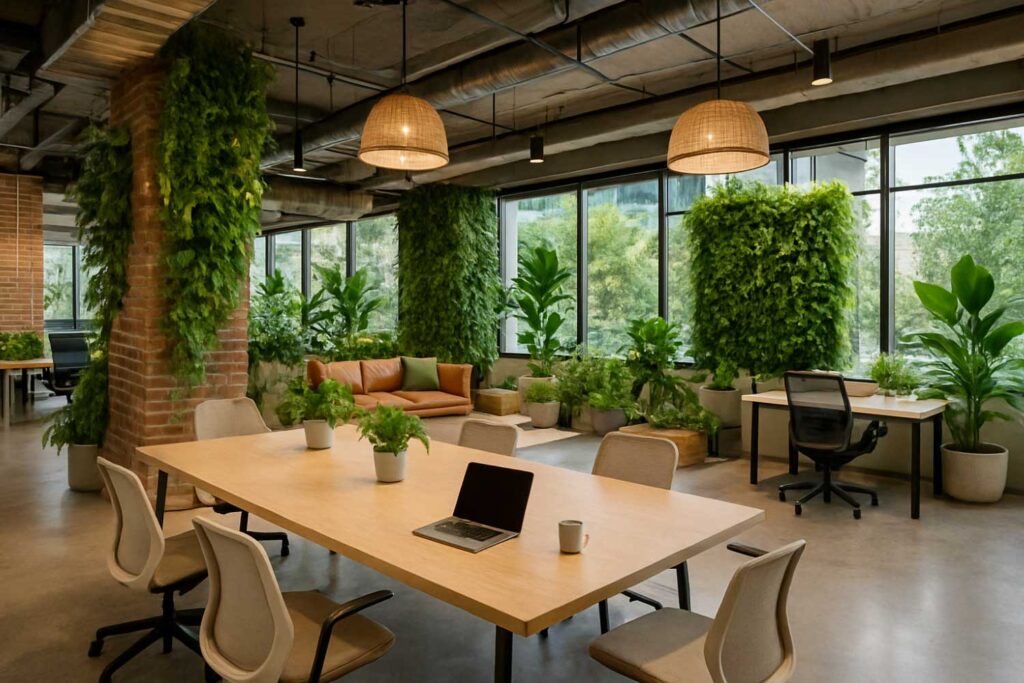
It’s a safe assumption that most office workers spend the majority of their days indoors. Despite this being inevitable, that doesn’t change the fact that greenery is critical for mental wellbeing. This is where biophilic office design comes into play. It’s essentially a workplace approach that reconnects people with nature and delivers real business value.
Here are five key benefits that biophilic design brings, and why they’re especially relevant today:
1. Enhanced Well-being and Reduced Stress
From living greenery to natural light and organic textures, biophilic design creates environments that feel calmer and more supportive. Studies show that workplaces incorporating natural elements can reduce stress, improve mood, and enhance mental recovery. For landlords and businesses, it means happier occupants and fewer wellness-related distractions.
2. Boosted Productivity and Creativity
Following on from the first benefit – when people feel better, they work better. Research indicates that environments rooted in nature-inspired design can deliver measurable improvements in concentration, creativity and cognitive performance. For example, biophilic workspaces have been shown to deliver up to a 15 % productivity uplift.
3. Improved Air Quality
Greenery helps filter toxins, regulate humidity, and create healthier micro-environments. This support for physical health can lead to lower absenteeism and less fatigue among staff. That’s good for businesses and even better for landlords focused on occupancy and asset resilience.
4. Enhanced Talent Attraction and Retention
In 2026, the office is a key part of employer identity. A nature-rich workspace signals care and quality as part of a brand identity. Studies show employees are more likely to stay, perform and feel connected in environments that reflect their wellbeing and lifestyle priorities.
5. Sustainability
Biophilic design aligns perfectly with ESG and sustainability goals: renewable materials, better building performance, and a meaningful connection to the natural world. For landlords, incorporating biophilic features signals long-term viability and market differentiation – spaces that will age well and continue to appeal in the future.
How to Make It Work in Your Space
Here are a few practical considerations:
- Start with daylight: maximise natural light, minimise obstructions, consider outdoor views or internal gardens.
- Use natural materials and textures: wood, stone, natural fabrics and colours that reflect nature’s palette.
- Bring in greenery thoughtfully: vertical plant walls, planters, indoor foliage – but make sure this is paired with maintenance plans (dead plants don’t quite have the same appeal…).
- Focus on multiple senses: sound (water features or ambient nature sounds), texture (unpolished wood, natural fibres), even scent (herbs, aromatic plants) to deepen experience.
- Design with purpose: understand how people use the space and tailor greenery or natural cues accordingly.
In 2026 and beyond, offices that feel sterile, detached or uninspiring are fundamentally less competitive.
Whether you’re a landlord looking to lease faster and retain better tenants, or a business wanting a workspace that empowers your people – you’ll want a space that prioritises wellbeing in employees.