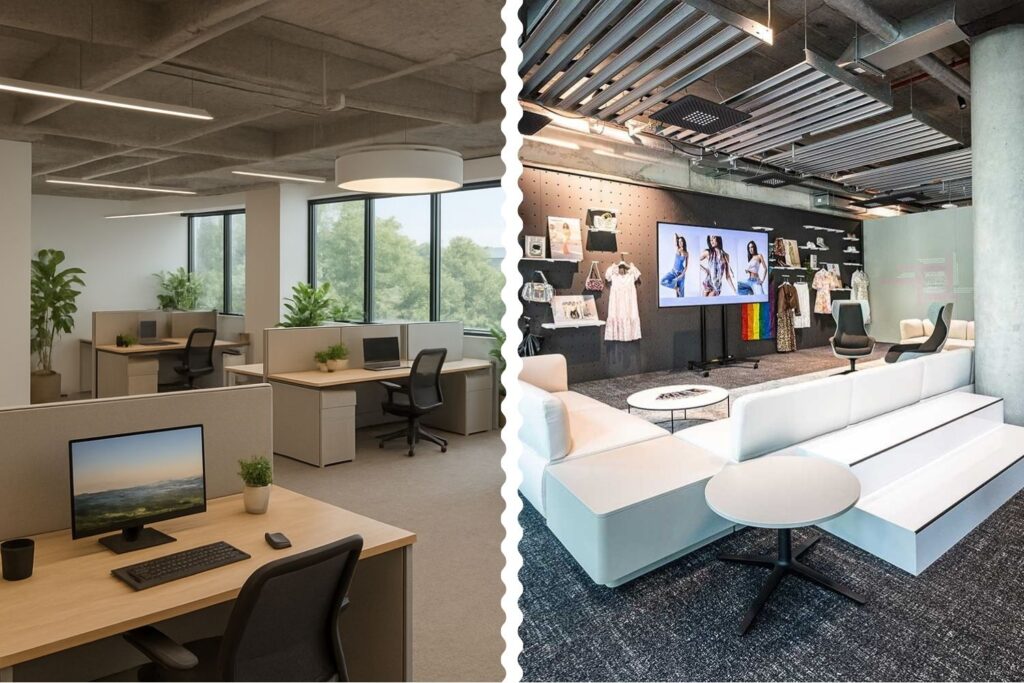
How workplaces have changed from 2015 to 2025…and what comes next.
Ten years ago, the office was a daily destination. Typically employees had assigned desks, fixed layouts, and everyone was in, five days a week.
Today, its role is completely different. The office is now:
- A collaboration hub
- A culture and connection space that offers what WFH can’t
- A flexible environment built around activity-based working
- A place teams visit with purpose
The hybrid working structure has forced offices to earn their value. The best offices now feel like destinations tailored to teamwork, creativity, and community.
How Office Priorities Have Shifted
1. Wellbeing comes first
Natural light, greenery, ergonomic furniture, acoustic comfort, and spaces to decompress have all become baseline expectations.
2. Inclusivity and neurodiversity
Offices now incorporate a mix of sensory environments to support the full spectrum of working styles – from low-stimulation areas to busy collaborative zones.
4. Flexibility above everything
Modular furniture, moveable walls, and adaptable layouts let businesses evolve without costly rebuilds.
How Aesthetics Have Evolved
Workplaces have shifted from corporate and uniform to warm, human and varied.
The last decade has brought:
- Natural materials and biophilic design
- Softer lighting and textures
- Café-style social areas and lounge-inspired meeting spaces
- Design that reflects brand identity and culture
- A mix of environments rather than a single aesthetic
What This Means for the Future
1. Offices as experiences
We may see spaces with more of a hospitality influence. Prioritising comfort, atmosphere, and amenities that make the workplace feel special.
2. Smarter, data-led spaces
Things like sensors, booking systems and adaptable layouts will likely respond directly to how people use the office.
3. Greater inclusivity
We should be prepared for more personalisation and varied environments will continue to replace one-size-fits-all layouts to accommodate a varied workforce.
4. Hybrid as the baseline
We’re already seeing this a lot, and the most successful, futureproof workplaces will support both remote and in-office work without friction.
The last decade has shifted the focus from desks and square footage to people, experience, wellbeing and adaptability.
The offices that thrive in the next decade will be those built for humans first – commute-worthy, inclusive and sustainable.